

Lagatar24 Desk
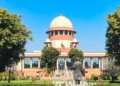
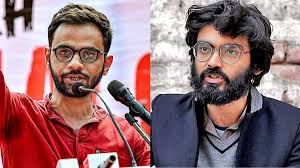
New Delhi: The Supreme Court on Friday deferred the hearing on the bail pleas of Umar Khalid, Sharjeel Imam, Meeran Haider, and Gulfisha Fatima—accused in the 2020 Delhi riots conspiracy case—till November 3, offering no interim relief. The bench of Justices Aravind Kumar and NV Anjaria heard arguments from both sides before rescheduling the matter for the next date.
Kapil Sibal Argues For Umar Khalid
Senior advocate Kapil Sibal, representing Umar Khalid, argued that his client was not present in Delhi during the riots and questioned how he could be implicated when there was no direct involvement. Sibal pointed out that although 751 FIRs were registered in the riots case, Khalid was named as an accused in only one.
‘Case Being Stretched Needlessly’: Gulfisha Fatima’s Counsel
Appearing for Gulfisha Fatima, senior advocate Abhishek Manu Singhvi told the court that she had been in jail since April 2020, more than five years and five months. He said while the chargesheet was filed in September 2020, supplementary chargesheets continued to be filed annually. “This has become an annual ritual,” Singhvi said, alleging deliberate delay in proceedings. He noted that 939 witnesses had already been listed, but charges were still not framed, urging the court to consider gender parity and fairness while hearing Fatima’s plea.
Sharjeel Imam’s Defence Cites Delayed Probe
Advocate Siddharth Dave, appearing for Sharjeel Imam, highlighted that the investigation itself dragged on for three years, with the Delhi Police repeatedly claiming that it was “still ongoing,” thereby delaying trial commencement.
Police Call Riots A ‘Regime Change Operation’
A day before the hearing, the Delhi Police submitted an affidavit in the Supreme Court after being reprimanded for delays. The affidavit described the 2020 Delhi riots as a “pre-planned conspiracy” aimed at destabilising the central government and inciting violence nationwide. Police alleged that protests and riots were orchestrated as part of a coordinated plan to portray the Citizenship (Amendment) Act (CAA) as “anti-Muslim” and to attract international attention during the visit of then US President Donald Trump.
The police also claimed to possess documentary and technical evidence linking the accused to a deep-rooted communal conspiracy, arguing that the accused had abused court procedures to delay the trial. Invoking the Unlawful Activities (Prevention) Act (UAPA), the police asserted that “in such grave cases of terrorism, the rule is jail, not bail.”
Delhi High Court Had Earlier Denied Bail
Earlier, the Delhi High Court had rejected the bail pleas of all four accused, observing that violence and conspiratorial acts under the guise of protest cannot be tolerated. The Supreme Court’s next hearing on November 3 will determine the future course for the detained activists.