
Lagatar24 Desk
New Delhi: After nearly 17 years in exile, Bangladesh Nationalist Party (BNP) leader Tarique Rahman has returned home amid political turmoil, reviving debates around his past influence, alleged shadow governance, and his potential role in shaping Bangladesh’s future ahead of the February 2026 elections.
A Political Heir’s Dramatic Homecoming
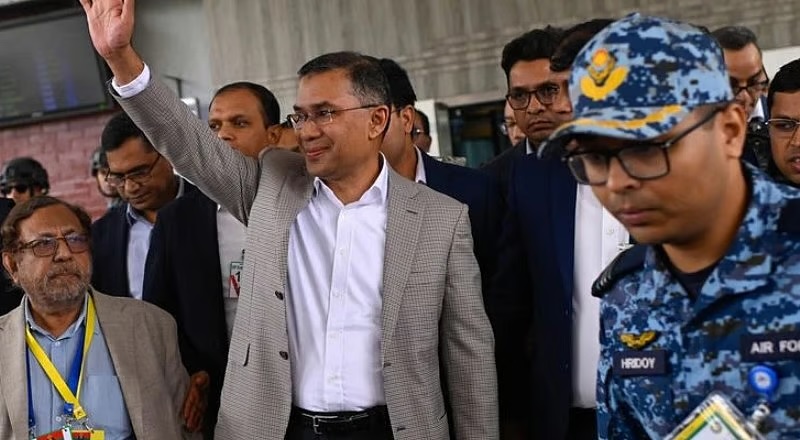
Tarique Rahman, son of former prime minister Khaleda Zia and late president Ziaur Rahman, returned to Dhaka on Christmas Day to a massive public reception. Supporters lined the streets, chanting slogans and waving flags, as Rahman signalled the launch of BNP’s election campaign, declaring that he has a “plan for Bangladesh” at a time when the country is searching for stability after months of unrest.
The ‘Dark Prince’ and Allegations of a Shadow PMO
Rahman’s critics have long portrayed him as the real power behind the BNP-led government between 2001 and 2006. Operating from Hawa Bhaban, officially his office but widely described as a “shadow PMO,” Rahman was accused by diplomats and intelligence sources of exercising parallel authority while his mother served as prime minister. Allegations ranged from political interference to corruption and criminal networking.
Controversies That Shaped His Exile
During the BNP-Jamaat era, Rahman was linked by investigators and media reports to major controversies, including the 2004 grenade attack on then opposition leader Sheikh Hasina and alleged arms smuggling to insurgent groups. These accusations intensified political instability, culminating in a military-backed caretaker government in 2007 that arrested Rahman on multiple charges, including corruption and money laundering.
Arrest, London Exile, and BNP’s Defence
Rahman spent 17 months in detention before being released in 2008 for medical treatment in London, beginning his long exile. Throughout this period, the BNP has consistently maintained that all cases against him were politically motivated, portraying Rahman as a victim of rival political vendettas rather than wrongdoing.
Return at a Political Crossroads
Rahman’s comeback comes as Bangladesh faces a fragile transition following the ouster of Sheikh Hasina’s Awami League government. Widely seen as a frontrunner for the 2026 polls, the BNP has already begun groundwork for contesting key constituencies, with Rahman expected to contest his mother’s long-held seat if elections proceed as scheduled.
Positioning as a Champion of Democracy
Seeking to reframe his image, Rahman has projected himself as a pro-democracy leader advocating a return to elected governance. Addressing party workers earlier this month, he said only democracy could stabilise Bangladesh and urged BNP cadres to strengthen democratic institutions, signalling a shift in narrative from the controversies of his past.