
Lagatar24 Desk
Ranchi: Banking services across the country are set to be severely affected on January 27, 2026, as the United Forum of Bank Unions (UFBU) has announced a nationwide strike. Nearly 8 lakh bank employees and officers from public sector, private, foreign, regional rural, and cooperative banks will participate in the protest.
Demand for Five-Day Work Week
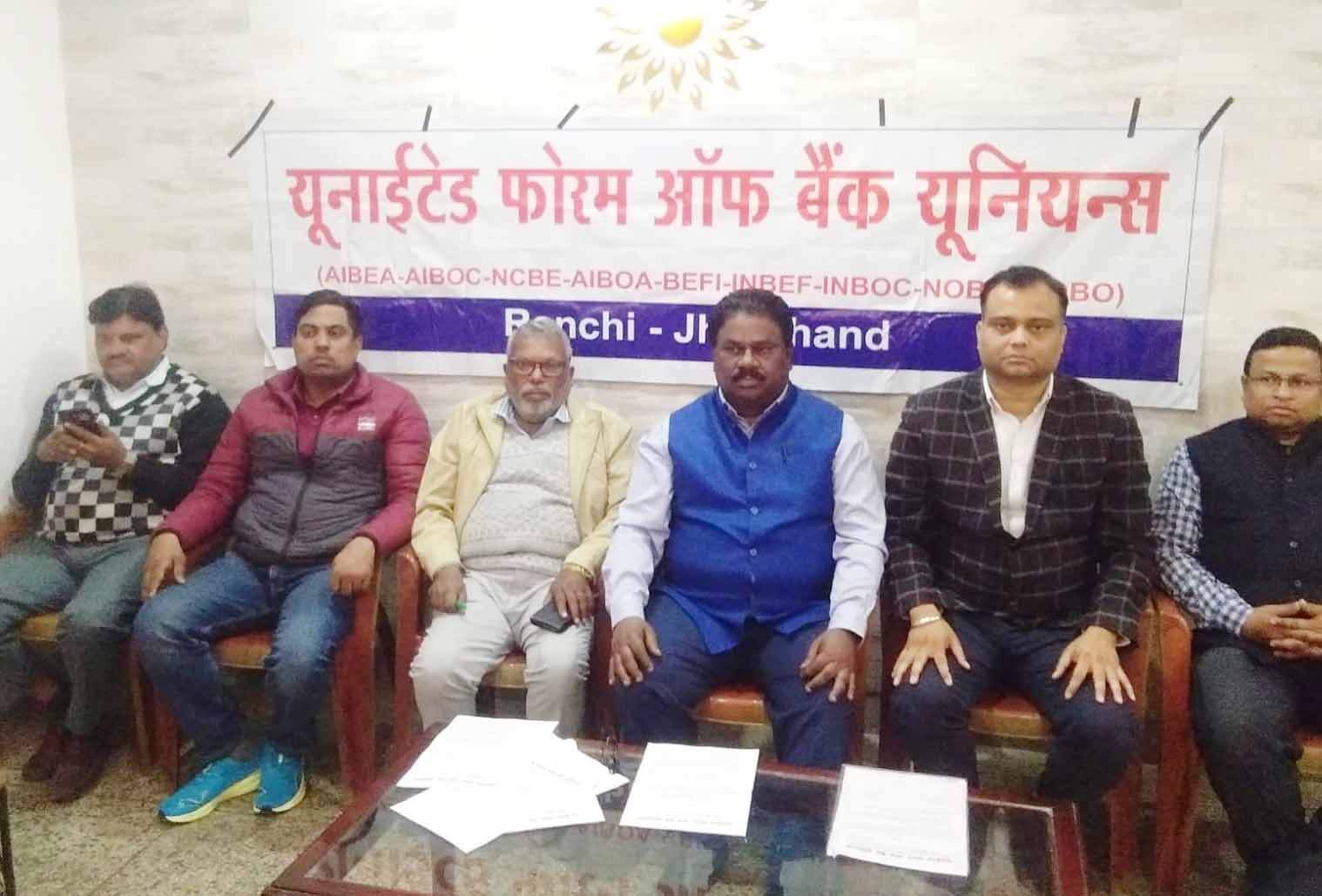
Addressing a press conference in Bariatu, UFBU representatives said bank employees have been demanding the implementation of a five-day working week. Despite repeated discussions, the central government has failed to implement the demand and continues to delay the decision.
Banking Services to Be Disrupted
Union leaders stated that due to the strike, essential banking services such as cheque clearance, loan processing, and cash transactions will be disrupted nationwide. The strike is being organised to protest what the unions describe as the government’s continued breach of commitments.
Agreement Reached, Implementation Pending
According to UFBU, the government and the Indian Banks’ Association (IBA) had already agreed to a five-day banking week. A bilateral agreement was signed in 2015, followed by a Memorandum of Understanding on December 7, 2023. Further confirmation came through a joint note issued by IBA on March 8, 2024, agreeing to declare remaining Saturdays as holidays while extending working hours from Monday to Friday. However, the decision has not been implemented so far.
Government Accused of Delaying Decision
UFBU state secretary Prakash Oraon alleged that the government has been sitting on the file for the past two years. He recalled that a proposed two-day strike in March 2025 was withdrawn after government assurances, but no concrete action followed.
Digital Banking Cited as Alternative
Union representatives argued that extending working hours on weekdays would not inconvenience customers, as digital banking services, ATMs, and online platforms are already widely available. They reiterated that the strike is a last resort to press for the long-pending demand.