



Lagatar24 Desk
New Delhi: The United States has imposed a sweeping 25% tariff on all Indian exports, set to take effect from August 7, 2025, with zero exemptions—a move trade experts describe as one of the toughest US trade actions in recent history. According to the Global Trade Research Initiative (GTRI), this measure is being used to make “an example” out of India, as other nations like China have retained tariff exemptions on crucial sectors such as pharmaceuticals, energy, and electronics, while India faces the duty across all products, including previously protected categories.
Trump’s Trade Drive and ‘Dead Economy’ Jibe
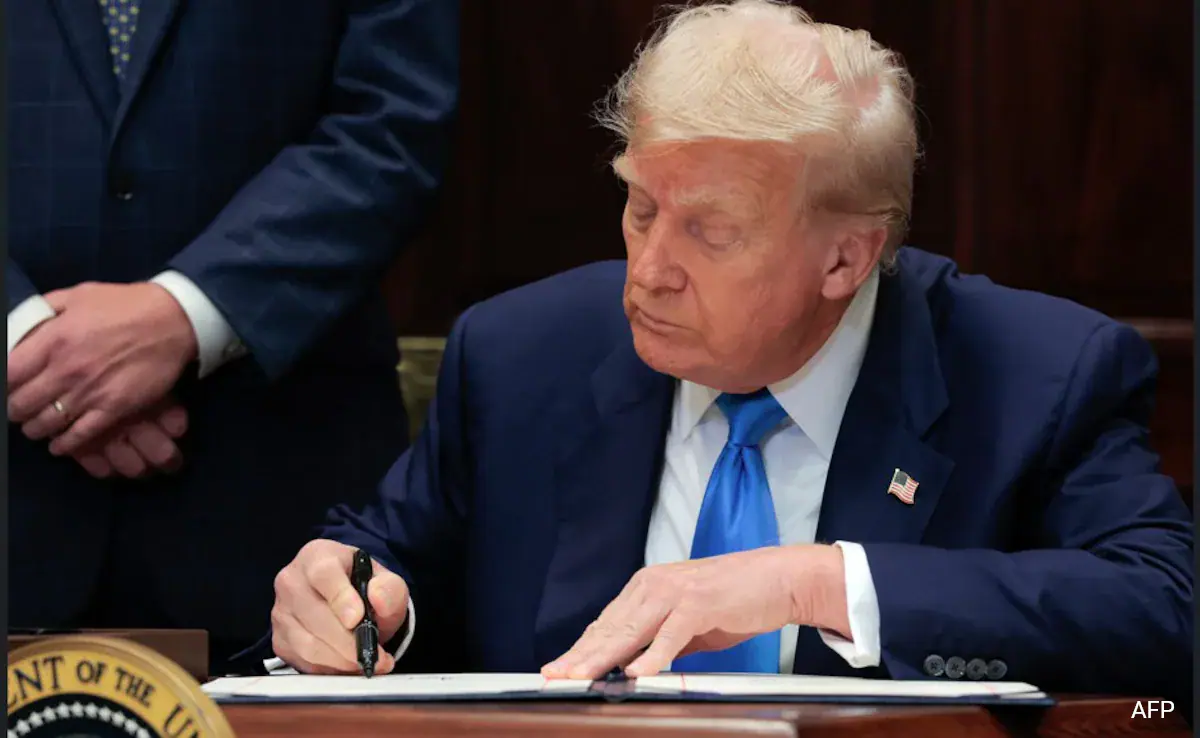
US President Donald Trump justified the blanket tariff by citing India’s trade practices, trade imbalance, and its continuing partnerships with Russia for energy and defense. Trump, in a series of public statements, labeled India a “dead economy,” criticized its membership in the BRICS bloc, and made it clear the tariff was a strategic warning to those not aligning closely with US geopolitical interests. The executive order, titled ‘Further Modifying The Reciprocal Tariff Rates,’ targets around 70 countries but denies India any sectoral relief, unlike for China, Vietnam, or Japan, which negotiated lower rates or exemptions for sensitive goods.
Massive Export Disruption Looms for India
GTRI estimates India’s goods exports to the US could plummet by 30%—from $86.5 billion in FY25 to $60.6 billion in FY26—due to the all-encompassing nature of this tariff. The most affected industries will be petroleum products, pharmaceuticals, electronics (including smartphones), gems and jewellery, auto components, textiles, and processed food. Major firms like Tata Motors, Bharat Forge, Reliance, and Apple’s India suppliers could face immense stress on US orders, with the threat of job losses and supply chain shifts hanging over key sectors.
No Deal Without Concessions, Say Trade Analysts
The US has left the door open to potential tariff relief, but only if India makes significant trade and strategic concessions, especially on sensitive sectors like agriculture and market access. GTRI founder Ajay Srivastava points out that while the 25% tariff is harsh, India’s refusal to compromise on core interests—such as protecting farm livelihoods—means it faces a blanket duty unlike countries that struck broader deals with Washington. As it stands, Indian goods shipped before October 5 will be taxed at old rates, but after that, all exports face the new 25% duty.
Broader Global Signals and Political Fallout
The move sends a message to other US trading partners: align with US policy, or face punitive duties. India’s main competitors—Bangladesh, Sri Lanka, Taiwan, and Vietnam—are now subject to lower 20% rates, threatening to erode India’s export competitiveness further. Domestically, the tariff announcement has amplified political disputes in India, with opposition leaders echoing Trump’s criticism and government officials stressing India’s “bright spot” status in the global economy.