



Lagatar24 Desk
Sriharikota: The Indian Space Research Organisation (ISRO) faced a setback on Monday as its PSLV-C62 mission failed after a deviation was detected near the end of the third stage, prompting the space agency to initiate a detailed analysis of the anomaly.
Deviation Detected During Third Stage
ISRO Chairman V. Narayanan said the four-stage Polar Satellite Launch Vehicle performed normally until the final phase of the PS3 stage, after which disturbances were observed in the flight path. He confirmed that data is being analysed and the agency will share detailed findings at the earliest. The anomaly prevented the successful completion of the mission, which was ISRO’s first launch attempt of 2026.
Mission Background and Payload Details
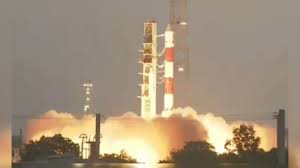
The 44.4-metre-tall PSLV-C62 lifted off from the First Launch Pad at the Satish Dhawan Space Centre on a commercial mission for NewSpace India Limited, marking the 64th PSLV flight and the fifth of the PSLV-DL variant. The rocket carried the primary payload EOS-N1 (Anvesha), a hyperspectral earth observation satellite meant for advanced surveillance, along with 14 co-passenger satellites and a re-entry capsule. The mission included advanced technology demonstrations such as AI-based onboard processing, IoT communication systems, radiation monitoring, and agricultural data collection.
Link to Earlier PSLV Setback
The failure comes months after PSLV-C61, launched in May 2025, also suffered a third-stage anomaly that prevented EOS-09 from reaching orbit. Following that incident, ISRO had constituted a failure analysis committee and implemented corrective measures before returning the launcher to service. Despite the latest setback, PSLV remains one of the world’s most reliable launch vehicles with only a handful of failures in its three-decade history.