


Lagatar24 Desk
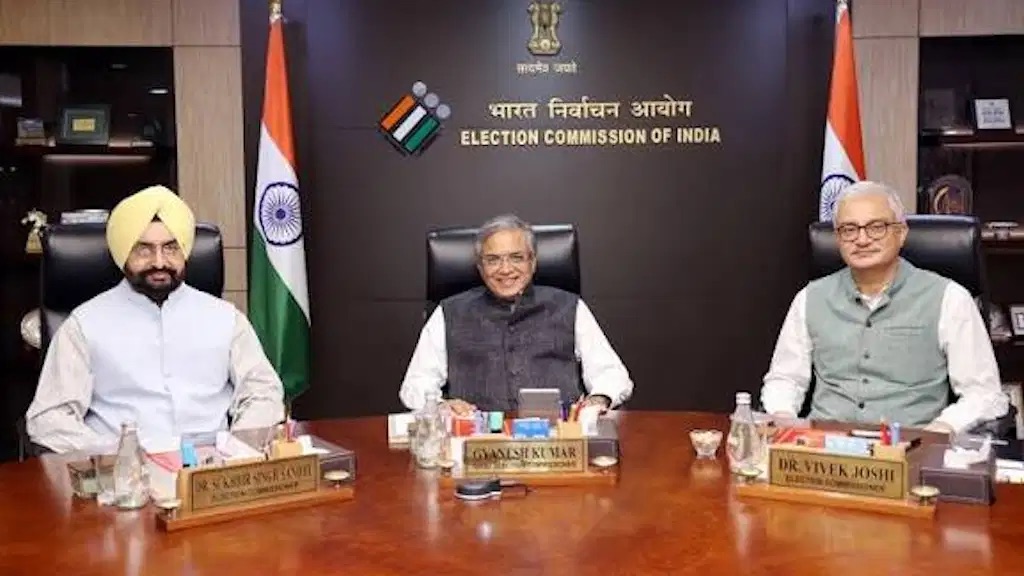
New Delhi: A report published by the English daily Indian Express on September 23, 2026 has triggered a nationwide uproar, putting the Election Commission of India and Chief Election Commissioner Gyanesh Kumar under scrutiny after it emerged that the two other election commissioners raised written objections against several of his decisions on at least 14 occasions over the past 10 months, calling them “unauthorised” and “illegal” — findings that lend weight to the opposition’s allegations of vote-rigging by the Commission.
Objections Centred on Voter List Revisions and IT Control
According to the report, Election Commissioners Sukhbir Singh Sandhu and Vivek Joshi repeatedly objected in writing to decisions taken under CEC Gyanesh Kumar’s leadership, most of which related to the addition and deletion of names during the Special Intensive Revision (SIR), new voter registrations, and control over IT systems.
Unapproved Change to Form 6 Called “Unauthorised and Illegal”
In July 2026, a new question was reportedly added to Form 6 — used for new voter registrations — asking whether an applicant’s parents or grandparents had been listed in the previous SIR. This change was made despite written advice against it from the two commissioners. Sandhu recorded on file on August 13, 2026 that the move was “unauthorised and illegal” and should be withdrawn immediately, noting that it had been introduced without government approval, rule amendment, or gazette notification.
Voter Database Control Centralised in Delhi, Bypassing Local Officers
The report also flags that control of the voter database through the ECINet software was centralised with Delhi’s IT department (DG IT), depriving the legally empowered Electoral Registration Officers, District Election Officers and Chief Electoral Officers of full access and decision-making authority. Both commissioners stated in writing that this violated the Representation of the People Act, 1950 and the Registration of Electors Rules, 1960, arguing that authority over preparing voter lists and adding or removing names rests with local officials, not a Delhi-based IT officer, and that the DG (IT) had no legal power to restrict this authority.
Commissioners Allege Decisions Bypassed Consensus Norms
Under the 2023 law governing the Commission (Section 18), decisions are required to be taken by consensus wherever possible, and by majority in case of disagreement, with all three commissioners holding equal standing under Article 324 of the Constitution — meaning the CEC cannot act unilaterally. Sandhu and Joshi complained that several directives and appeals were issued in the Commission’s name without their knowledge, asserting that such communications did not carry the Commission’s actual approval.
Other Procedural Objections Raised
In July 2026, an official (Manish Garg) reportedly altered the IT department’s oversight structure without the Commission’s consent. Both commissioners wrote separately to Cabinet Secretary T.V. Somanathan on July 29, calling it a “clear violation” of the law and demanding action; the order was later withdrawn by the same official. Additional objections cited in the report include questions over the authority under which appeals were filed against voters added by judicial officers in West Bengal, eligible voters being left out in Goa due to software shortcomings, and new IT modules being built without informing the Commission.