



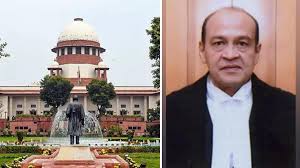

Lagatar24 Desk
New Delhi: The Supreme Court on Thursday dismissed Justice Yashwant Varma’s plea challenging the in-house committee’s recommendation for his impeachment over a high-profile cash recovery case. The court termed the plea “not worth entertaining” and criticised the judge’s conduct as not “confidence-inspiring”, clearing the way for Parliament to begin impeachment proceedings under Articles 124, 217, and 218 of the Constitution.
Parliament to Investigate Cash-at-Home Controversy
Justice Varma is under scrutiny after burnt stacks of cash were discovered at his Delhi residence in March. A three-judge panel, led by then Chief Justice Sanjiv Khanna, concluded an in-house investigation and recommended his impeachment. Following this, more than 145 MPs submitted a formal notice in the Lok Sabha seeking action. If impeached, Justice Varma could become the first High Court judge in independent India to be removed from office.
Supreme Court Dismisses Judge’s Objections
In his petition, Justice Varma argued that the in-house panel had no jurisdiction to probe a sitting judge, denied him a fair hearing, and overstepped parliamentary authority. However, the court rejected all his arguments, stating that such panels have constitutional validity. The bench, comprising Justices Dipankar Datta and AG Masih, also questioned the timing of the plea, asking why he didn’t raise objections before appearing before the committee.
Impeachment Process Explained
While the term “impeachment” is not directly mentioned in the Constitution, the removal of judges is governed by the Judges Inquiry Act of 1968 and Articles 124 and 218. A motion can be initiated in either House of Parliament with signatures from at least 50 Rajya Sabha MPs or 100 Lok Sabha MPs. Once admitted, the motion is examined, followed by further investigation and voting before being sent to the President.
Cash Discovery Sparks Judicial Integrity Debate
The controversy erupted on March 15 when firefighters discovered burnt currency notes at Justice Varma’s official residence after a fire incident. Though the judge denied any connection to the cash and claimed a conspiracy, the incident raised major concerns about corruption in the judiciary. The in-house committee’s report, accessed by media, stated that the judge and his family maintained access to the area where the money was found.