

Lagatar24 Desk
Srinagar: Five years after the abrogation of Article 370, Kashmir is witnessing a blend of hope, challenges, and transformation. The improved security situation is evident from the highest voter turnout in a Lok Sabha election in 40 years, with the Kashmir Valley experiencing a substantial 30-point increase in poll participation compared to 2019. The three seats in the Valley—Srinagar, Baramulla, and Anantnag-Rajouri—recorded turnouts of 38.49%, 59.1%, and 54.84%, respectively, the highest since 1984.
One of the most notable changes is the influx of economic investments. Since Independence, Jammu and Kashmir had only received private investments totaling Rs 14,000 crore. However, following the abrogation of Article 370 and the introduction of the new Industrial Development Scheme, the Union Territory has received investment proposals worth nearly one lakh crore in the last three years.
Investors have requested over 62,000 kanals (7,750 acres) of land in Jammu and Kashmir, with more than 34,000 kanals (4,250 acres) sought in the Jammu division and over 27,000 kanals (3,375 acres) in the Kashmir division. The proposals for investment exceed Rs 99,000 crore. The Industries Department anticipates securing 6,000 to 8,000 kanals of private land in the Jammu division, primarily in Kathua, Ghagwal, Samba, and Jammu.
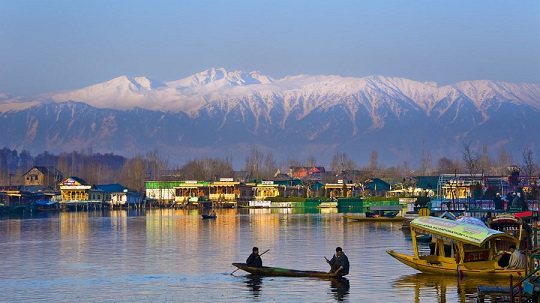
Projects like the Zojila Tunnel, which promises year-round connectivity between Srinagar and Leh, are nearing completion. New industrial parks and tourism initiatives have been launched, attracting investors from across India. The famous Dal Lake is seeing renewed efforts in conservation and tourism development, boosting the local economy.
Politically, the region has undergone significant changes. The delimitation of constituencies and new political alignments have altered power dynamics. Local bodies and Panchayati Raj institutions have been strengthened, giving a greater voice to grassroots democracy, though elections for these bodies are overdue since last year.
The absence of a legislative assembly and direct central governance has left many residents feeling disconnected from the power corridors, disenfranchised from their constitutional right to a representative government.
Despite a decrease in terrorism in Kashmir, Pakistan is attempting to maintain instability in the Union Territory by infiltrating foreign terrorists into the mountainous areas of the Jammu region. Reports indicate that Pakistan has pushed at least 50 foreign terrorists into Jammu.
These terrorists have established a network, with 25 reportedly operating in the Dudu-Basantgarh belt of Udhampur, Doda, and Kishtwar districts, while the rest are active in the border districts of Rajouri and Poonch. They exploit the rugged terrain and dense forests as hideouts.
Intelligence reports suggest that these terrorists, mostly from Pakistan, have infiltrated the Jammu region over the last two years. Operating in small, elusive groups of four to five, they blend into the harsh terrain to avoid detection.
From 2003 to 2021, the Jammu region was peaceful, leading to the withdrawal of troops, which Pakistan’s deep state is now exploiting.
Culturally, efforts are being made to promote Kashmiri heritage and traditions. Festivals, crafts, and local art are being showcased on larger platforms, fostering a sense of pride and identity among the youth. However, demographic changes and fears of losing cultural identity remain sensitive topics for many Kashmiris.
Five years post-abrogation, Kashmir presents a mosaic of progress and persistent challenges. The region’s journey towards stability and prosperity is ongoing, marked by efforts to foster economic growth, social cohesion, and political stability. The coming years will be crucial in determining how these changes unfold, and whether the aspirations of the Kashmiri people for peace, dignity, and development will be fully realized.