
Lagatar24 Desk
New Delhi: US President Donald Trump has marked a sharp shift in tone during the ongoing Iran conflict, moving from threats of severe military action to optimism about a “Golden Age” in the Middle East following a newly announced two-week ceasefire between the United States and Iran.
From Aggressive Warnings to Ceasefire Optimism
After 39 days of hostilities, both nations agreed to a temporary ceasefire and to negotiate on a 10-point proposal put forward by Iran. Trump announced the development on Truth Social, calling it a “big day for world peace.”
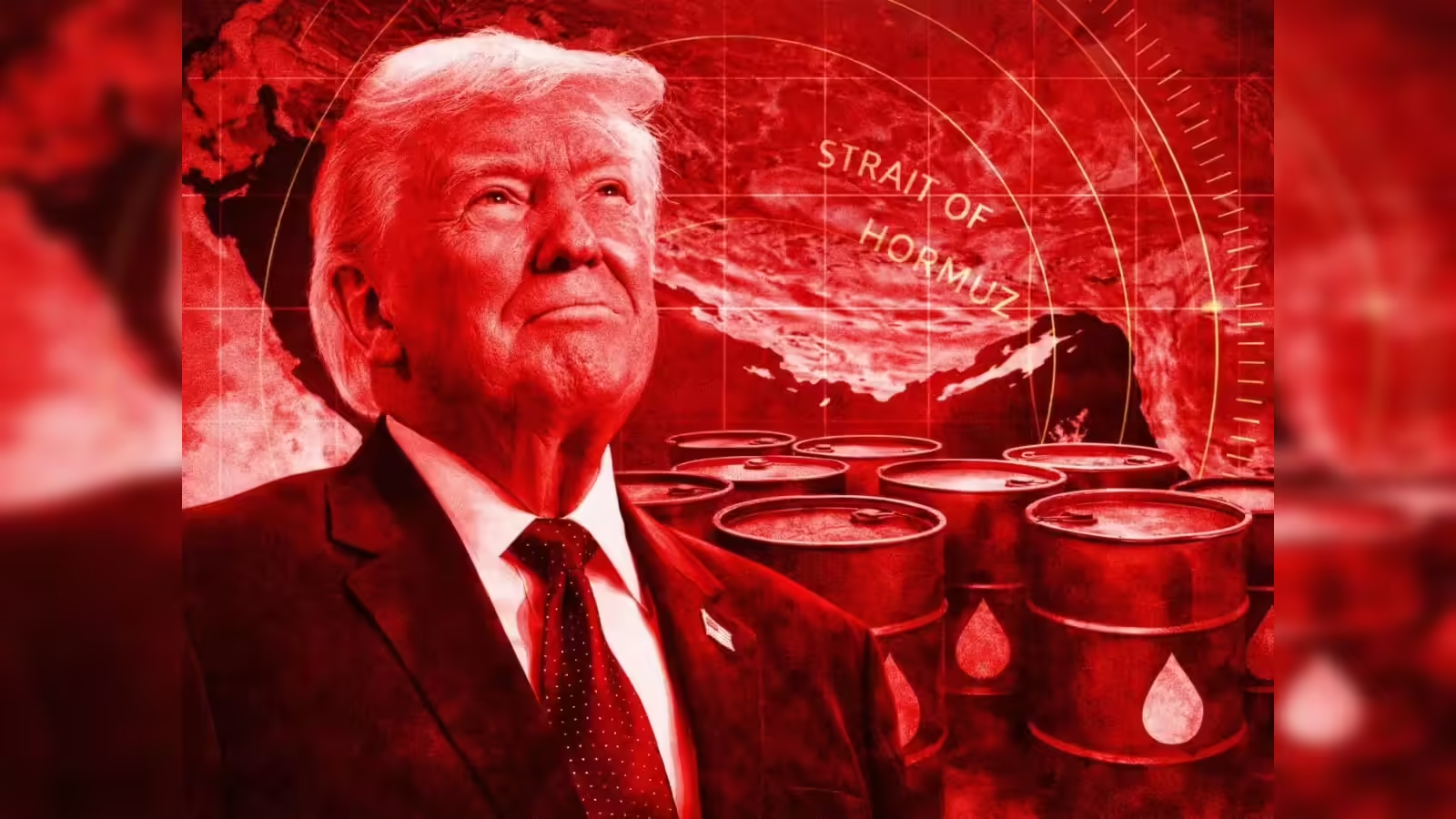
A key part of the agreement includes reopening the strategically crucial Strait of Hormuz, through which nearly 20% of the world’s oil supply passes. Trump expressed confidence in economic recovery and reconstruction in the region, stating that the Middle East could now enter a period of prosperity.
This marks a significant departure from his earlier stance, where he had warned of pushing Iran “back to the Stone Age” by targeting critical infrastructure such as power plants and bridges if negotiations failed.
Iran’s Firm Response and Ceasefire Conditions
Despite agreeing to talks, Iran maintained a strong position, warning that the conflict is not fully over. Officials emphasized that their military remains on alert and any violation would be met with a decisive response.
Iran’s leadership, including Mojtaba Khamenei, described the ceasefire as a strategic move rather than an end to the war. The proposal accepted by the US includes demands such as lifting sanctions, maintaining Iran’s control over the Strait of Hormuz, and withdrawal of US forces from the region.
Both Sides Claim Strategic Victory
While the United States has projected the ceasefire as a “complete victory,” Iran has also framed it as a success, asserting that it forced negotiations on its terms. Statements from Iran’s Supreme National Security Council reinforced that military readiness remains intact despite the temporary truce.
The evolving situation highlights a fragile pause in tensions, with diplomatic negotiations now set to determine whether the region moves toward stability or renewed conflict.