
Lagatar24 Desk
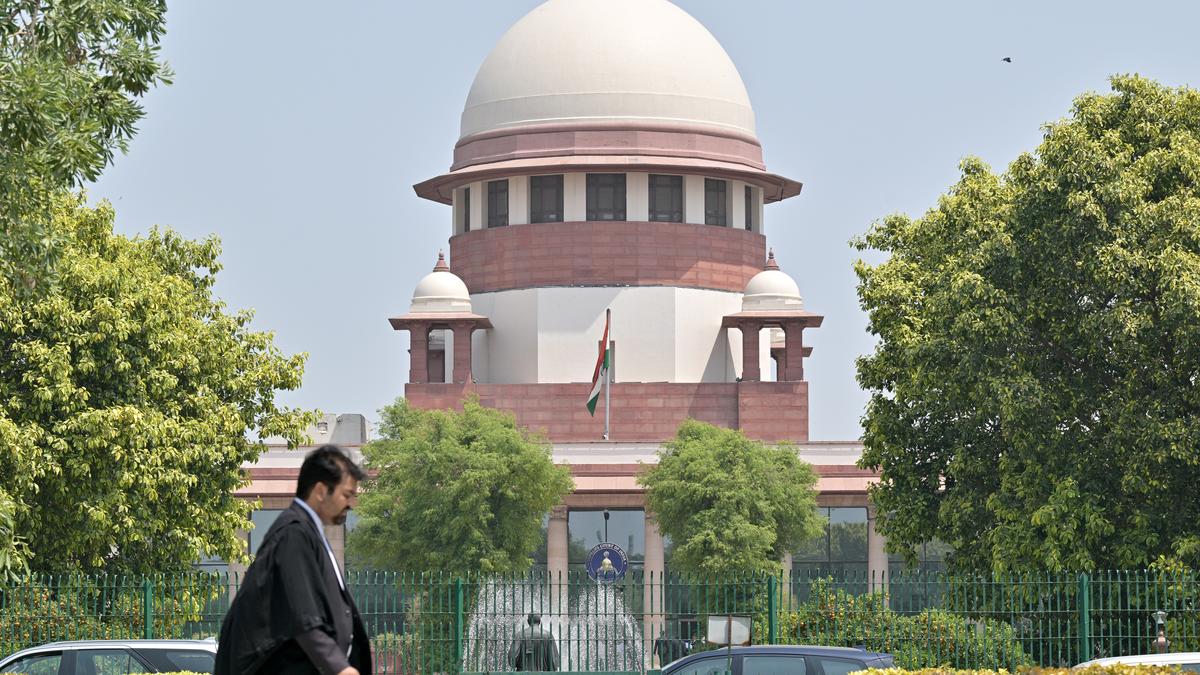
New Delhi: The Supreme Court on Tuesday underscored the constitutional presumption behind laws passed by Parliament while hearing a set of petitions challenging the recently passed Waqf Amendment Act. Chief Justice of India BR Gavai, heading a bench with Justice AG Masih, stated that “courts cannot interfere unless a glaring case is made out,” reinforcing judicial restraint unless clear constitutional violations are evident.
Debate over scope of hearing
The Centre, represented by Solicitor General Tushar Mehta, submitted its response addressing three core concerns earlier identified by the court: Waqf by user, inclusion of non-Muslims in Wakf Boards, and the identification of government land as Waqf. Mehta urged the court to confine the proceedings to these three points. However, senior advocates Kapil Sibal and Abhishek Manu Singhvi, representing the petitioners, opposed narrowing the hearing’s scope. Singhvi objected, saying, “There cannot be a piecemeal hearing,” while Sibal reiterated that the broader constitutional implications must be addressed.
Concerns over property rights and religious freedom
Kapil Sibal sharply criticised the new provisions, alleging the law was designed to facilitate the takeover of Waqf properties without due process. He raised specific objections to the clause requiring a person to have practised Islam for five years before creating a Waqf. “If I am on my deathbed and want to make a Waqf, I have to prove my religious practice. This is unconstitutional,” he argued. He also warned that under the amended law, complaints from panchayats or individuals could lead to Waqf property being declassified, with government officers acting as judges in their own cause.
Religious equity under question
Sibal also contrasted the Waqf system with Hindu religious practices, pointing out the lack of state funding for mosques and the financial hardship faced by many Muslim religious institutions. “There is no chadhava like in temples. Mosques and graveyards do not have ₹2,000–₹3,000 crore corpus funds,” he said. When the Chief Justice noted that some dargahs do receive grants, Sibal clarified that he was specifically referring to mosques.