

Lagatar24 Desk
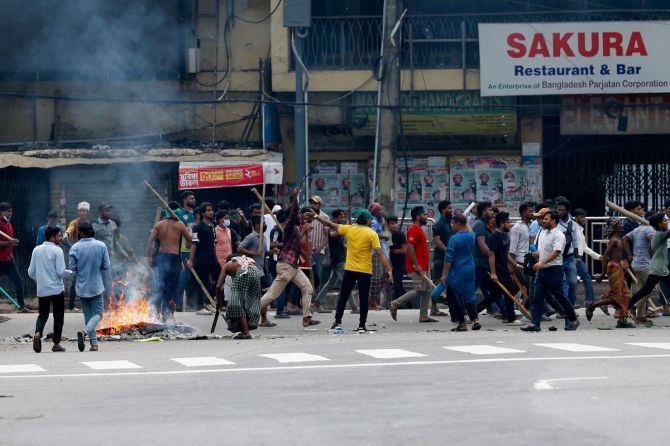
Dhaka: Bangladesh is reeling from one of its deadliest days of protests, with nearly 100 people killed in violent clashes between demonstrators and ruling party supporters. The violence erupted yesterday as thousands demanded the resignation of Prime Minister Sheikh Hasina, escalating the already tense situation in the country.
Key Points on the Crisis in Bangladesh:
- Violent Clashes and Casualties: The clashes, which resulted in 98 deaths, have pushed the total death toll to approximately 300 since protests began in July. Dozens more were injured in yesterday’s confrontations.
- Protest Trigger: The violence intensified during a non-cooperation program where protesters faced fierce opposition from government supporters.
- Government Response: In response, the Bangladesh Home Ministry has imposed an indefinite nationwide curfew and restricted mobile internet access across the country. A three-day general holiday has been declared to ensure public safety amid ongoing unrest.
- Student Protests: Student protesters have organized a “March to Dhaka” today, demanding Prime Minister Sheikh Hasina’s resignation. Analysts fear that the violence could escalate further.
- Background of Protests: The unrest follows earlier violent clashes where over 200 people were killed, primarily students protesting against a controversial quota system reserving 30% of government jobs for relatives of veterans from the 1971 War of Independence.
- India’s Advisory: India has advised its nationals in Bangladesh to exercise “extreme caution” and limit their movements. The Indian Assistant High Commission in Sylhet has urged Indian citizens to stay in touch and provided an emergency contact number.
- UN’s Call for Peace: Volker Turk, the United Nations’ human rights chief, has condemned the “shocking violence” and urged the Bangladeshi government to cease targeting peaceful protesters.
- Roots of Unrest: The rallies, which began as protests against civil service job quotas, have evolved into broader calls for Prime Minister Hasina’s resignation. The protests have become one of the most significant challenges to her 15-year rule.
- Widespread Support: The anti-government movement has gained support from various sectors of Bangladeshi society, including celebrities and musicians, with songs calling for public support spreading widely on social media.
- Dismissal of Dialogue: Protesters have rejected Ms. Hasina’s invitation for dialogue, consolidating their demands into a unified call for the government’s resignation.
The situation in Bangladesh remains highly volatile, with ongoing protests and a strong government crackdown. The international community watches closely as the crisis unfolds.