

Surjit Singh
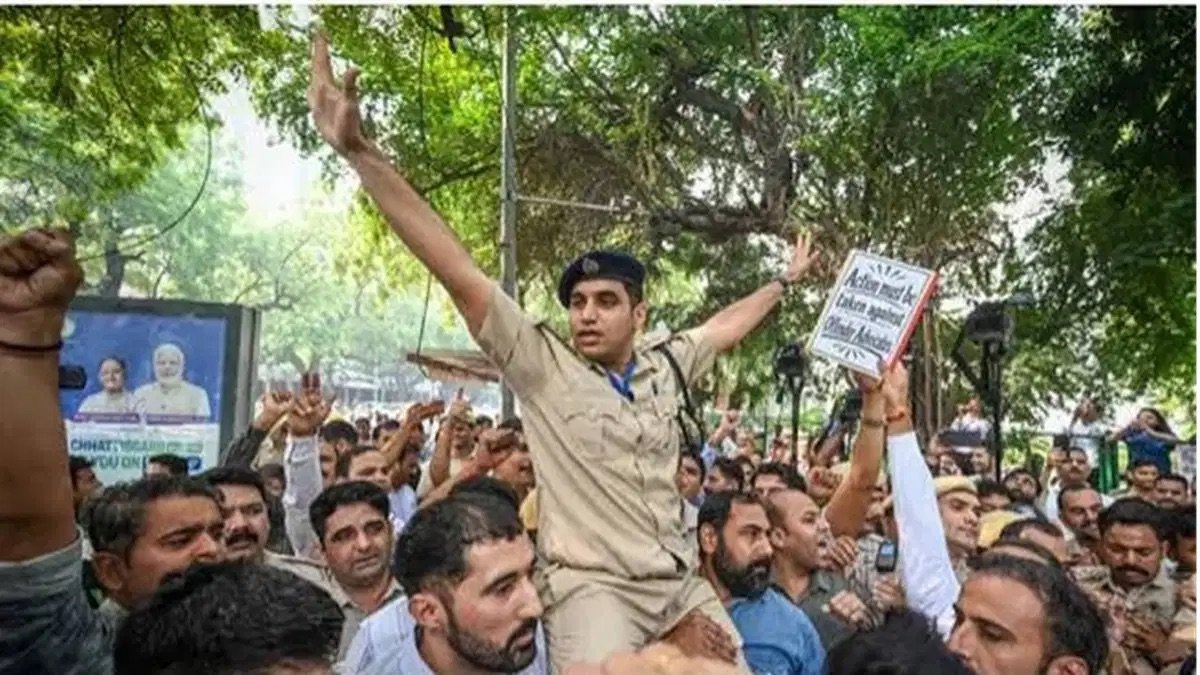
Delhi Police personnel staged a protest outside the force’s headquarters on November 2, something that has not happened before, with more than 100 jawans demonstrating over the transfer of ACP Manasvi Vashishth and a related lawyers’ dispute, after which the Union Home Ministry suspended the ACP.
From Shahdara Clash to Lawyers’ Strike
On October 23, policemen and lawyers clashed at Shahdara police station, and a lawyer, Lalit Wats, suffered a serious head injury. Lawyers at the district courts then went on an indefinite strike. On October 28, on the directions of the Union Home Ministry, ACP Manasvi Vashishth and Shahdara in-charge inspector Arun Kumar were transferred, after which the lawyers called off their strike.
Policemen’s Demands
The protesting personnel demanded that ACP Vashishth and Inspector Kumar be restored to their earlier postings, that cases registered against lawyers not be withdrawn, that a standard operating procedure be framed for lawyers’ entry and conduct in police stations, that a gathering of more than five lawyers be treated as a crowd, that security at courts and police stations be increased, and that coordination be established with the Bar Association.
Writer Sees Political Interference Behind the Unrest
In this analysis piece, the author argues that political pressure on Delhi Police officers has reached its worst level, claiming that authorities push the police forward whenever they face a problem, and that the force then bows when another group overpowers it. The writer says political interference has made the force corrupt and trained it to act dishonestly, and that the force is now becoming restive, perhaps realising that it should act only within the law and the Constitution. After the protest, the Home Ministry suspended ACP Vashishth. The author asks whether the unrest will be contained quickly, warning that otherwise it could spread to other states, and perhaps then the police would break free of political pressure.