

Lagatar24 Desk
Kathmandu: A barrier lake upstream of the Gyirong border port on the Tibetan side has breached its banks, prompting security forces to warn rescuers to move to safety, just two days after a deadly glacial collapse triggered flash floods that killed 469 people in the region.
Fresh Warning Issued as Water Dam Bursts Again
Nepal Police confirmed that information had been received about the water dam bursting again on the Tibetan side, urging all security personnel, rescue workers and members of the public involved in relief operations to remain alert and immediately move to safe locations or report the situation. Authorities in Nepal halted rescue operations for the next 90 minutes even as 1,400 people, including hundreds of foreigners, remained missing, with officials warning that further devastation could strike within hours.
Rising River Levels Force Suspension of Helicopter Operations
Narendra Pariyar, the senior-most bureaucrat of Nepal’s Rasuwa district, said river water levels were visibly rising. Helicopter rescue operations in the flooded district were subsequently halted, with eyewitnesses reporting locals rushing uphill to escape the rising waters. Both Nepal and China had earlier warned of fresh flooding risks in the Himalayas after a lake formed from flash flood debris across their shared border threatened to burst.
China Also Pauses Rescue Operations Amid Renewed Flood Risk
China has similarly paused its rescue operations, citing the high risk of renewed flooding in Tibet, where hundreds remain missing two days after the deadly mudslide. State broadcaster CCTV reported that the lake formed by massive debris piles had begun overflowing toward the area rescue teams were headed to, prompting all rescue teams to be ordered to stand by and wait for further instructions, with emergency teams that had already accessed the area directed to withdraw one kilometre.
Barrier Lake Formed After Wednesday’s Mudslide
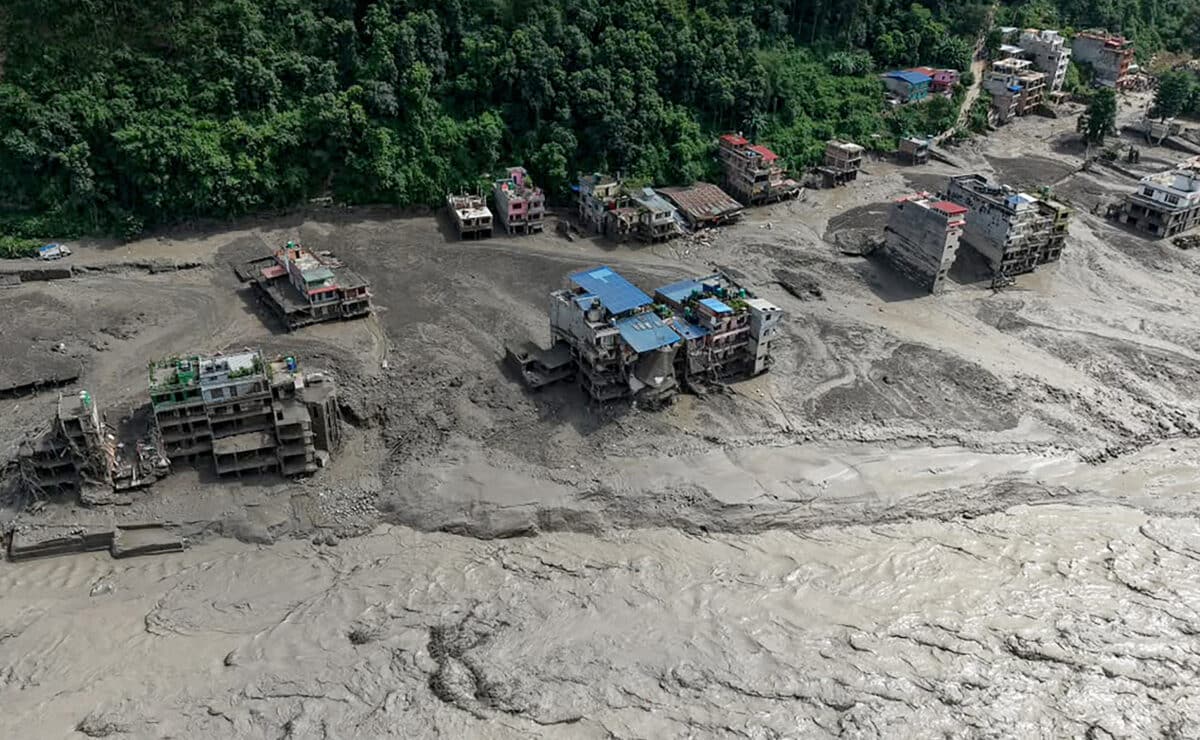
The lake formed after a wall of mud and debris struck the border hub of Gyirong in Tibet on Wednesday, with its formation captured in aerial footage by a Chinese rescue team on Thursday, showing masses of brown water accumulating in a basin with no visible outlet, already submerging bushes and trees while pushing against a barrier of debris and stones. Rescuers and residents on the lower banks in Nepal had already been directed to move to higher ground, with Chinese personnel and vehicles withdrawing to safer areas amid intensifying risks of the lake bursting and potential secondary disasters such as mountain collapses and avalanches.