

Lagatar24 Desk
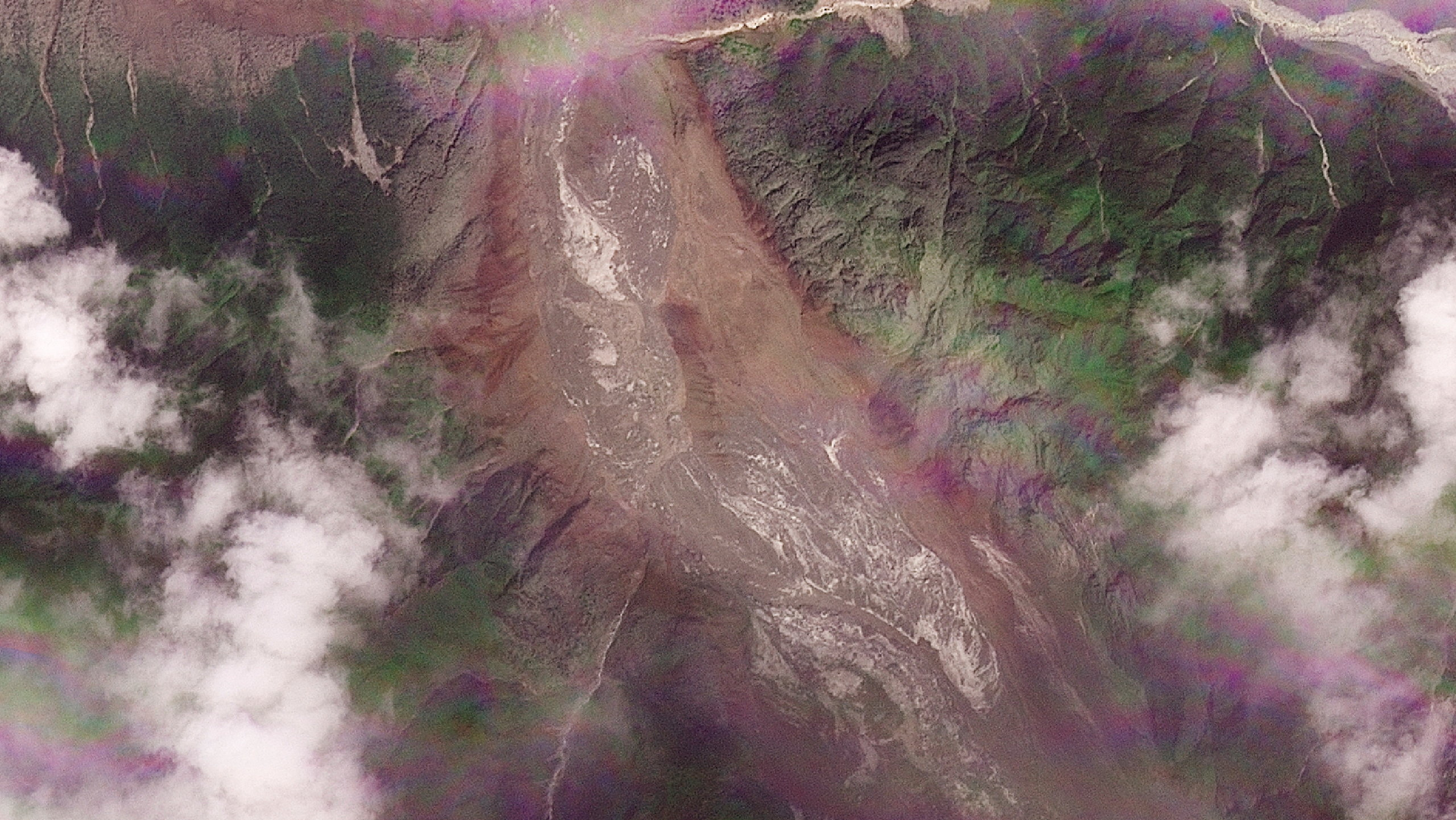
Kathmandu: The devastating flash floods that tore through Nepal’s Himalayan border region on Wednesday were likely triggered by a massive chunk of glacier breaking away high in the mountains and crashing into a river valley below, according to an initial analysis by geologists and glaciologists, who described the event as an ice avalanche involving a sudden collapse and release of ice, water and debris.
Glacier Section 2,000 Feet Wide Snapped Off from High Altitude
Satellite imagery examined by geologist Daniel Shugar of the University of Calgary indicated that a section of glacier roughly 2,000 feet wide broke away almost cleanly from an altitude of around 17,000 feet, dropping nearly 4,000 feet before reaching the valley floor and sending pulverised ice and water toward the Lhende Khola river, eventually flowing into the Bhotekoshi River near the Nepal-China border. Shugar described the resulting devastation as resembling a bomb explosion, with the valley floor left covered in deposits from the broken-up glacier.
High-Altitude Ice Mass Turned into Fast-Moving Flood
Simon Cook, a glaciologist at the University of Dundee, explained that the massive chunk of ice stored at high elevation carried enormous potential energy, which was released as the ice pulverised into a fast-moving mixture of water and debris upon impact. This surge then moved northwest through the valley, sweeping through settlements, roads, bridges and hydropower infrastructure. Officials have warned that another flood remains possible, as a blockage is still lodged upstream on the Lhende Khola.
Earthquake’s Role in Disaster Remains Uncertain
The exact sequence of events triggering the disaster remains unclear. A magnitude 4.4 earthquake was recorded in the region early Wednesday, and while climate and disaster experts have also pointed to the possibility of an ice-rock avalanche, scientists caution that it is still too early to determine whether the earthquake played a role or to establish a single definitive cause.
Region Has Faced Similar Flooding in the Past 14 Months
The disaster struck an area that has experienced a similar event within the past 14 months, with the Lhende Khola having flooded twice during this period, according to experts at the International Centre for Integrated Mountain Development, with last year’s flash flood linked to an overflowing glacial lake in Tibet. Disaster risk reduction specialist Saswata Sanyal said the latest flooding stemmed from an ice-rock avalanche originating from a glacier on the Nepal side, which blocked the river before releasing a sudden downstream surge, stressing the importance of early-warning systems in an increasingly warming Himalaya.
Rising Temperatures Increasing Regional Vulnerability
The wider Himalayan region is becoming increasingly vulnerable to floods, landslides and glacier-related hazards as temperatures rise, with research indicating that glaciers across the Hindu Kush Himalaya are losing ice at an accelerating rate since 2000. The disaster has left dozens dead and hundreds missing across Nepal and Tibet, including foreign tourists, workers and pilgrims among the unaccounted for, with rescue efforts hampered by damaged roads, heavy sediment and unstable terrain.