


Lagatar24 Desk
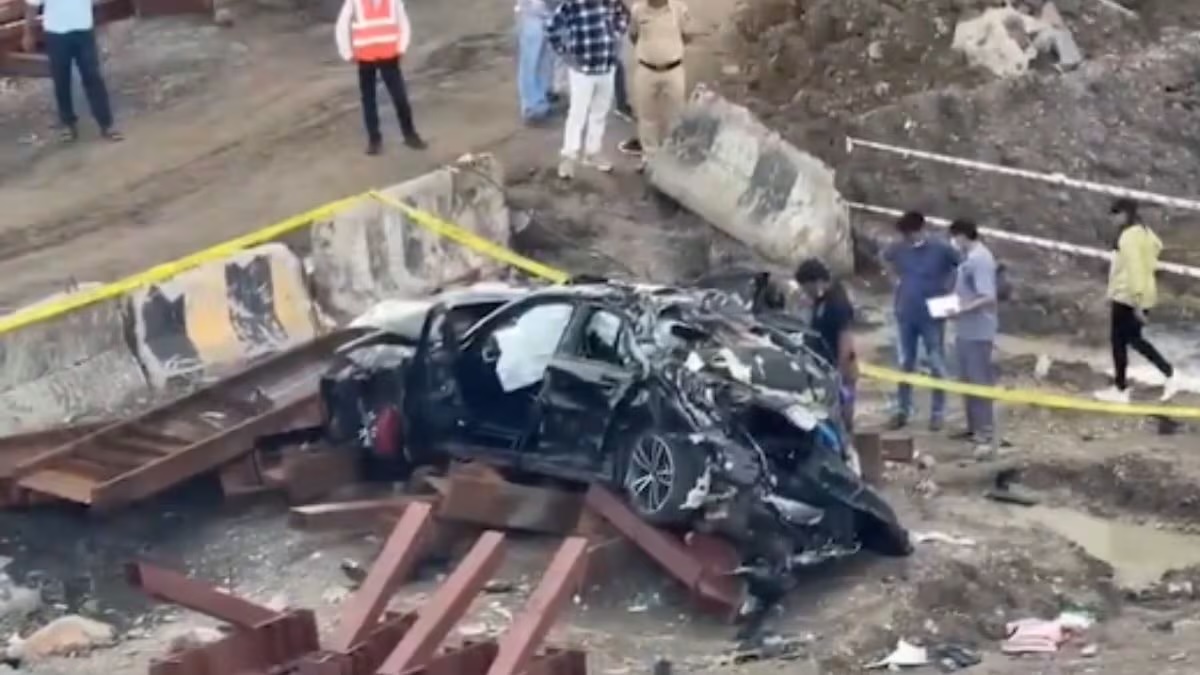
Mumbai: A speeding BMW plunged off a bridge on Mumbai’s Coastal Road in the early hours of Sunday, killing three occupants and critically injuring another, once again putting the spotlight on speeding and safety compliance on the city’s high-speed corridor.
Luxury Car Loses Control Near Haji Ali
According to reports, the car was travelling from Marine Drive towards Haji Ali when the driver reportedly lost control, hit a barrier and fell into an under-construction parking area below. The incident comes just weeks after Mumbai Police booked several supercars for allegedly racing through the Coastal Road tunnel, reviving concerns about overspeeding on the corridor. Built to ease congestion and travel time along the city’s western coastline, the Coastal Road has become popular among motorists for its smooth, uninterrupted stretches, though recent incidents point to the risks that come with high-speed driving on such urban expressways.
A 29.2-km Corridor Cutting Travel Time Sharply
The Mumbai Coastal Road is an eight-lane, 29.2-km corridor connecting South Mumbai with the western suburbs, cutting travel time from over two hours to around 40-45 minutes and easing pressure on congested routes like the Western Express Highway, while also helping reduce fuel use and vehicular emissions.
Speed Limits and ANPR Surveillance
The corridor has clearly defined speed limits for different stretches — up to 80 kmph on the main carriageway, 60 kmph inside the twin undersea tunnels, and 40 kmph on ramps, curves and interchanges. Authorities have installed Automatic Number Plate Recognition (ANPR) cameras at intervals of roughly 2-3 km to detect speeding and other violations automatically.
Access Restrictions and Vehicle Rules
The road is a fully access-controlled corridor, with entry and exit allowed only through designated ramps; stopping, reversing or making U-turns on the carriageway is strictly prohibited. As it functions as a closed system with no service lanes, fuel stations or rest areas, motorists who miss their exit must continue to the next interchange to rejoin their route. Access is currently limited to passenger cars and authorised public buses such as BEST and State Transport services, while two-wheelers, bicycles, auto-rickshaws, trucks, trailers, tractors, tempos and other heavy commercial vehicles are barred from using it; pedestrian movement on the main carriageway is also not allowed. Photography and videography on the Coastal Road and the adjoining Sea Link are restricted under notified regulations, with violations attracting penalties.