



Lagatar24 Desk
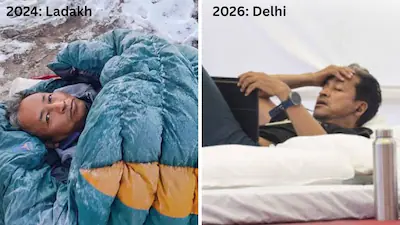
New Delhi: Sonam Wangchuk, whose activism has spanned climate change, education reform, democratic rights and environmental conservation, has once again become a national figure of protest, this time lying under a tarpaulin tent at Jantar Mantar for 21 days in Delhi’s humid July heat, demanding education reforms following the NEET paper leak controversy.
From Ladakh’s Climate Activist to National Reform Icon
In 2024, Wangchuk had survived on only water and salt while sleeping outdoors at 11,500 feet in sub-freezing temperatures in Ladakh for 21 days, demanding legal rights for the region to protect its resources. His journey from a celebrated innovator and educationist to the leading face of Ladakh’s political and environmental movement, and now the face of the education reform movement, reflects a broader shift from grassroots innovation to national-level activism. Trained as an engineer, Wangchuk pioneered sustainable technologies for high-altitude regions, including the well-known Ice Stupa project, artificial glaciers designed to store winter water for use in spring. His life and educational philosophy partly inspired the character of Phunsukh Wangdu, played by Aamir Khan, in the Bollywood film “3 Idiots,” which drew heavily from his work in Ladakh, though the film fictionalised the actual story.
Support for Article 370 Revocation Turned Into Constitutional Advocacy
When the Centre revoked Article 370 in 2019 and made Ladakh a separate Union Territory, Wangchuk initially welcomed the move, believing direct governance from Delhi would accelerate development and improve administration for the region. However, he simultaneously cautioned that Ladakh’s fragile ecology and tribal identity would require constitutional safeguards, a concern that gradually transformed him from a supporter of the move into a protester demanding stronger protections. Over the following years, he became the leading voice calling for Ladakh’s inclusion under the Sixth Schedule of the Constitution, statehood or greater democratic representation, constitutional safeguards against unchecked industrialisation, and greater local control over natural resources, leading several climate fasts, marches and protests in support of these demands.
Delhi March, NSA Detention and Return to Protest
In September 2024, Wangchuk led a nearly 1,000-kilometre march from Ladakh to Delhi with more than 100 supporters to press these same demands, but was detained by Delhi Police along with several other protesters upon reaching the Delhi border on October 1, citing prohibitory orders in the capital. The situation escalated further in 2025 when protests in Ladakh over statehood and Sixth Schedule demands turned violent, with authorities accusing Wangchuk of inciting unrest, an allegation he denied, maintaining he had consistently called for peaceful protest. He was subsequently detained under the National Security Act and spent 170 days in Jodhpur Central Jail before being released from preventive detention on March 14, 2026.
Wangchuk Returns to Protest, This Time for Education Reform
Just months after his release, Wangchuk returned to public protest, this time at Jantar Mantar demanding reforms to the education system. Appearing visibly weak on the 16th day of his hunger strike, he told reporters that while he was weak on the outside, he remained strong on the inside. Wangchuk has received several honours over the years, including the Ramon Magsaysay Award, in recognition of his work combining innovation with social impact.