


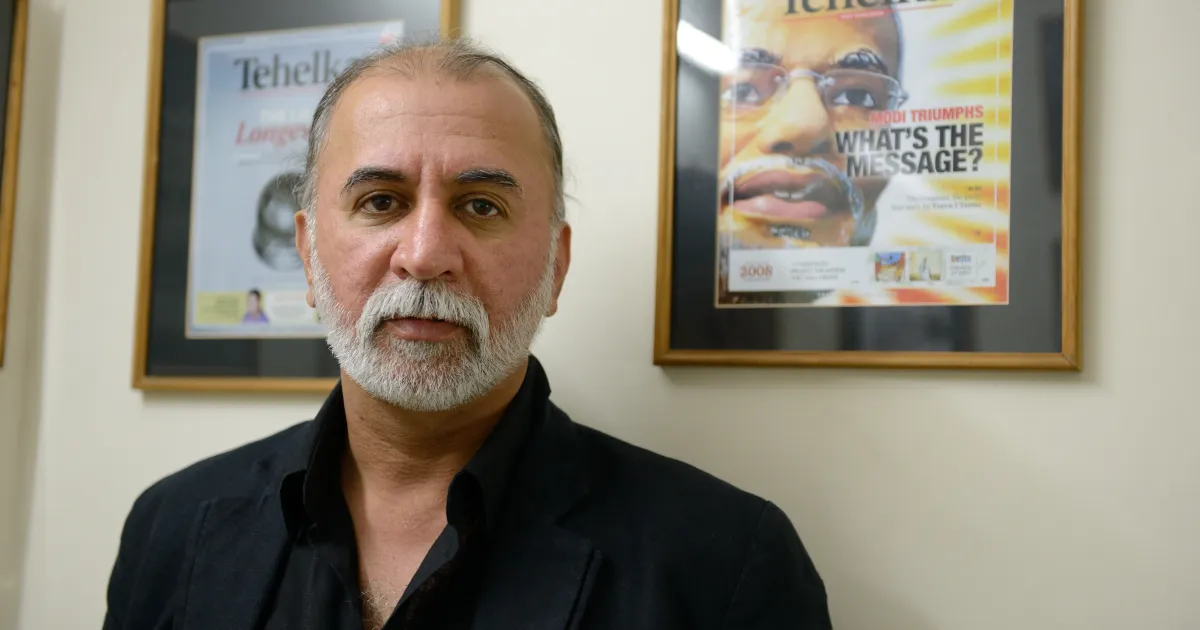
Lagatar24 Desk
Goa: Former Tehelka editor Tarun Tejpal, convicted by the Goa Bench of the Bombay High Court on Thursday in the 2013 sexual assault case involving a junior colleague, told the court he considers himself a victim and appealed for leniency, citing his age and family circumstances.
Case Background: Alleged Assault During ThinkFest Event
The case stems from allegations made by a young woman journalist, whose identity remains protected under law, who accused Tejpal of assaulting her twice inside a hotel elevator on November 7 and 8, 2013, during the sidelines of ThinkFest, an annual event sponsored by Tehelka magazine. Tejpal was arrested on November 30 that year. The Bombay High Court’s Goa bench delivered its verdict while hearing the Goa government’s appeal against Tejpal’s 2021 acquittal by the Goa Sessions Court.
Tejpal Seeks Leniency, Citing His Age
Addressing the court, Tejpal, now 62, said he believed himself to be a victim, mentioned that he has a wife, and requested the court’s leniency, adding that all relevant facts were already on record and that he intended to appeal the verdict.
Solicitor General Argues for Maximum Punishment
Solicitor General Tushar Mehta, representing the Goa government, told the court that Tejpal had failed to accept the victim’s refusal, describing him as a father figure who should never have engaged in such conduct given that the victim was of an age comparable to his own daughter. Mehta argued that despite the victim’s clear refusal, Tejpal continued to advance on two subsequent days, and urged the court to hand down the maximum punishment to send a clear message that a refusal must always be respected. Tejpal’s lawyer, in response to the judge’s query about any other cases against him, stated that there had been no prior FIR, complaint or allegation of misconduct.
Tejpal’s Shifting Stance Over the Years
Tejpal had initially expressed remorse over the incident, describing it as the result of “an awful misreading of the situation,” but after formal charges were filed, he characterised the case as a “political vendetta” against him.