


Lagatar24 Desk
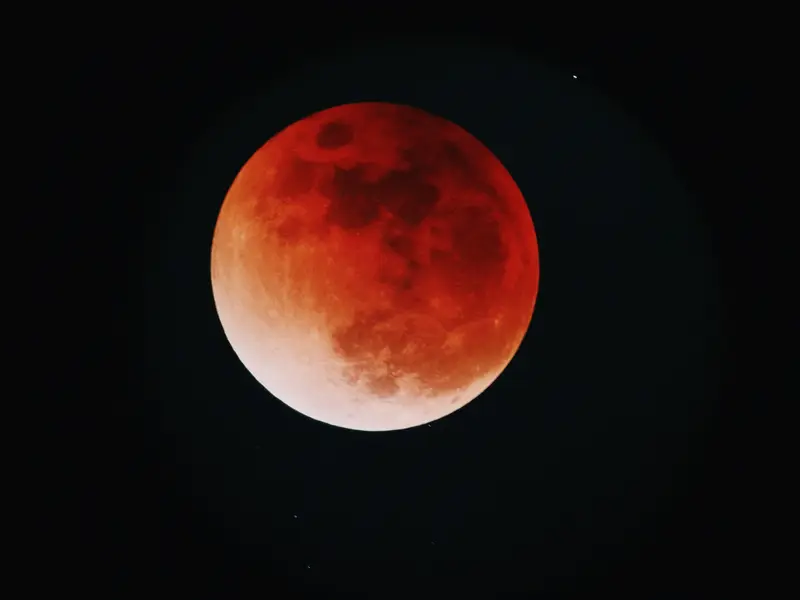
New Delhi: Skywatchers across India are set to witness a spectacular total lunar eclipse this evening, during which the Moon will turn a deep reddish hue, popularly known as a “Blood Moon.” This is the first total lunar eclipse of the year, and much of India will be able to view the latter stages as the Moon rises after sunset.
Why The Moon Turns Red
A total lunar eclipse occurs when Earth moves directly between the Sun and the Moon, casting its shadow on the lunar surface. During totality, sunlight passing through Earth’s atmosphere scatters blue light and allows red wavelengths to reach the Moon, giving it a rusty red appearance.
This eclipse has a magnitude of 1.155, meaning a vivid red shade could be visible for over an hour.
Eclipse Timings In India
The partial phase begins at 3:20 pm IST, with totality starting at 4:34 pm and peaking around 5:21 pm. The total phase is expected to last until approximately 6:23 pm.
However, actual visibility depends on local moonrise timings. Cities in eastern India such as Kolkata and Guwahati are likely to witness more of the total phase, while western regions may see only the later part as the Moon rises. In Delhi, moonrise is expected around 6:00 pm, so viewers should step out just before dusk.
How To Watch The Blood Moon
Unlike a solar eclipse, a lunar eclipse is completely safe to watch with the naked eye. No protective glasses or special equipment are required.
For a better view, choose a location with a clear eastern horizon, such as a rooftop, park, or open field, preferably away from heavy city lights. Binoculars or a telescope can enhance surface details like lunar craters, but they are not necessary.
Astronomy apps like SkySafari or Stellarium can help track the Moon’s movement. Clear skies will offer the best experience, so checking local weather forecasts is advisable.
A Rare Celestial Treat
With the eclipse coinciding with festive celebrations in parts of India, the Blood Moon offers a unique opportunity to gather with friends and family under the evening sky. Whether viewed casually or photographed through a smartphone, this rare event promises a memorable celestial display.